KIN Alumni, Students, and Faculty Represented at the 2020 Tokyo Summer Olympics!
With the Tokyo Olympics slated to take place on July 23 – August 8 in Japan, the School of Kinesiology is excited to have significant on-site representation in the Summer Games. KIN Alumni, students, and faculty members will both compete and work there. We are pleased to highlight a few of the shining KIN alumni athletes who have met or surpassed the Olympic standards.
KIN Alumni on the Road to Competing at the Olympics:
KIN alumna, Natalia Hawthorn hit the Olympic Standard for the women’s 1,500 metres at the Stumptown Twilight Meet in Portland, breaking the tape in a time of 4:04.20. Hawthorn’s run makes her the second Canadian woman to run Olympic standard in the 1,500 metres.
KIN alumnus, Evan Dunfee set a Canadian record at the Harry Jerome Track Classic on Saturday, June 12th in Burnaby, B.C., eclipsing a mark he set two years ago. Dunfee completed the 10,000-metre race walk in a personal-best 38 minutes 39.72 seconds. Dunfee made history at the 2019 World Athletics Championships when he won bronze to become Canada’s first ever medallist in the 50km race walk at the global biennial event.
As Canada’s top female windsurfer, Nikola Girke recorded the country’s best-ever Olympic result in the event with her 10th place finish at the 2012 Olympics. In January 2020, she surfaced from retirement to race RS:X in a major international competition and placed 4th at the World Cup in Miami. That result secured a 2020 Olympic spot for Nikola Tokyo. She is traveling to Tokyo on July 12th to compete in the RS:X against women Olympians from 26 other countries.
Liz Gleadle surprised many in her Olympic debut at London 2012 when she became the first Canadian woman to qualify for an Olympic javelin final since 1968. She was also Canada’s first female Olympian in javelin since 1988. But she had her true breakout season in 2014, after having missed all of 2013 with a back injury.
The UBC School of Kinesiology Community Serving at the 2021 Olympics!
KIN Associate Professor Maria Gallo was recently appointed the Assistant Coach for the National Women’s Rugby 7s team to help train the squad for the 2021 Summer Olympics in Tokyo. The team submitted a request to Rugby Canada that Maria come on board to coach them. She is highly respected as one of the few female rugby coaches in Canada and many of them had worked with her on the National Women’s 15s.
KIN will have significant on-site representation with Athletics Canada. Dr. Trent Stellingwerff, Dr. Gareth Sandford & Dr. Michael Koehle will travel with the team as Lead of Sports Science & Sports Medicine, Physiologist, and Sports Medicine Physician. Cameron Gee, KIN Post-doctoral Fellow, will also travel with the para-Olympians as a Physiologist.
KIN Alumni Working at the 2020 Olympics
The following KIN Alumni will work at the 2020 Olympics: Nicole Sullivan, BHK’04, physio for Beach Volleyball; Jasmine Mander BKin’18, MPT’20, National Women’s Soccer Team Performance Analyst; 2-time Olympic swimmer Martha McCabe BKin’12, COC Mission Staff member; James Thompson, MKin’14, Med’16, is the High Performance Director of Women’s Goalball at the Paralympics. Dr. Kerry MacDonald, KIN sessional and T-Bird volleyball coach coach, serves as Volleyball Canada staff.
Liz Gleadle surprised many in her Olympic debut at London 2012 when she became the first Canadian woman to qualify for an Olympic javelin final since 1968. She was also Canada’s first female Olympian in javelin since 1988. But she had her true breakout season in 2014, after having missed all of 2013 with a back injury.

With the official start of the 2020 Tokyo Olympic Games little over a month away, UBC President and Vice Chancellor Santa J. Ono hosted a virtual send-off for the dozens of Thunderbirds past and present who will represent their country as athletes, coaches, and staff.
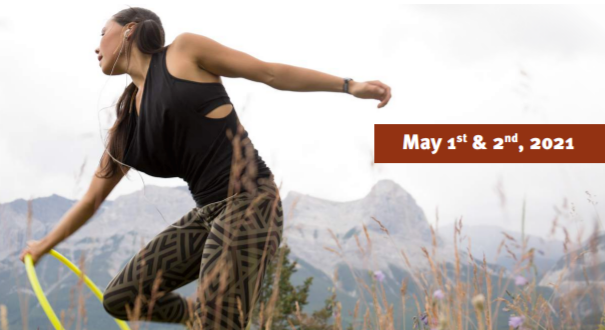
The Indigenous Physical Activity & Cultural Circle (IPACC) recently hosted the National Indigenous Physical Activity & Wellness Conference on May 1st and 2nd, 2021. It is the nation’s largest conference on Physical Activity & Wellness for First Nations, Metis and Inuit peoples and was created for all individuals interested in the promotion of health and wellness through physical activity. The event was organized by Dr. Rosalin Miles, who is also a research associate with the UBC Indigenous Studies in Kinesiology Program, and Shawn Hanna, who is the research coordinator with IPACC.
The event was a huge success with over 200 attendees at the virtual conference. Our opening keynote speaker on day one was Richard Peter, a member of the Senior Men’s National Team for basketball who was inducted into the BC Sports Hall of Fame. Dr. Wilton Littlechild, who was a past Cree chief and has worked nationally and internationally with United Nations to advance Indigenous Rights and Treaties, and Randy Ermineskin, who was one of the first Indigenous hockey players from the Maskwacis area to play in semi-professional hockey and is the current Chief of Ermineskin Cree Nation were our opening keynote speakers on day two. Waneek Horn-Miller, who is a graduate student with the Indigenous Studies in Kinesiology program, was the closing keynote speaker sharing her experience on the Canadian Women’s Water Polo team and competing at the 1999 Pan American Games and 2000 Sydney Summer Olympic Games. Our very own Dr. Moss Norman was also a presenter at the conference, sharing his research regarding the mainstream media coverage of a recent lawsuit involving five First Nations communities and Manitoba Hockey.
We would like to thank Dr. Darren Warburton and Dr. Shannon Bredin for their support during the planning of this event, and also to all our student volunteers for their support during the planning and execution of this virtual conference! IPACC would also like to thank the University of British Columbia – Community Excellence for providing honorarium support for our keynote speakers. Lastly, thank you to all the UBC KIN students, staff, and faculty who attended this event, and we hope to see you at our conference next year!
Dear members of the School,
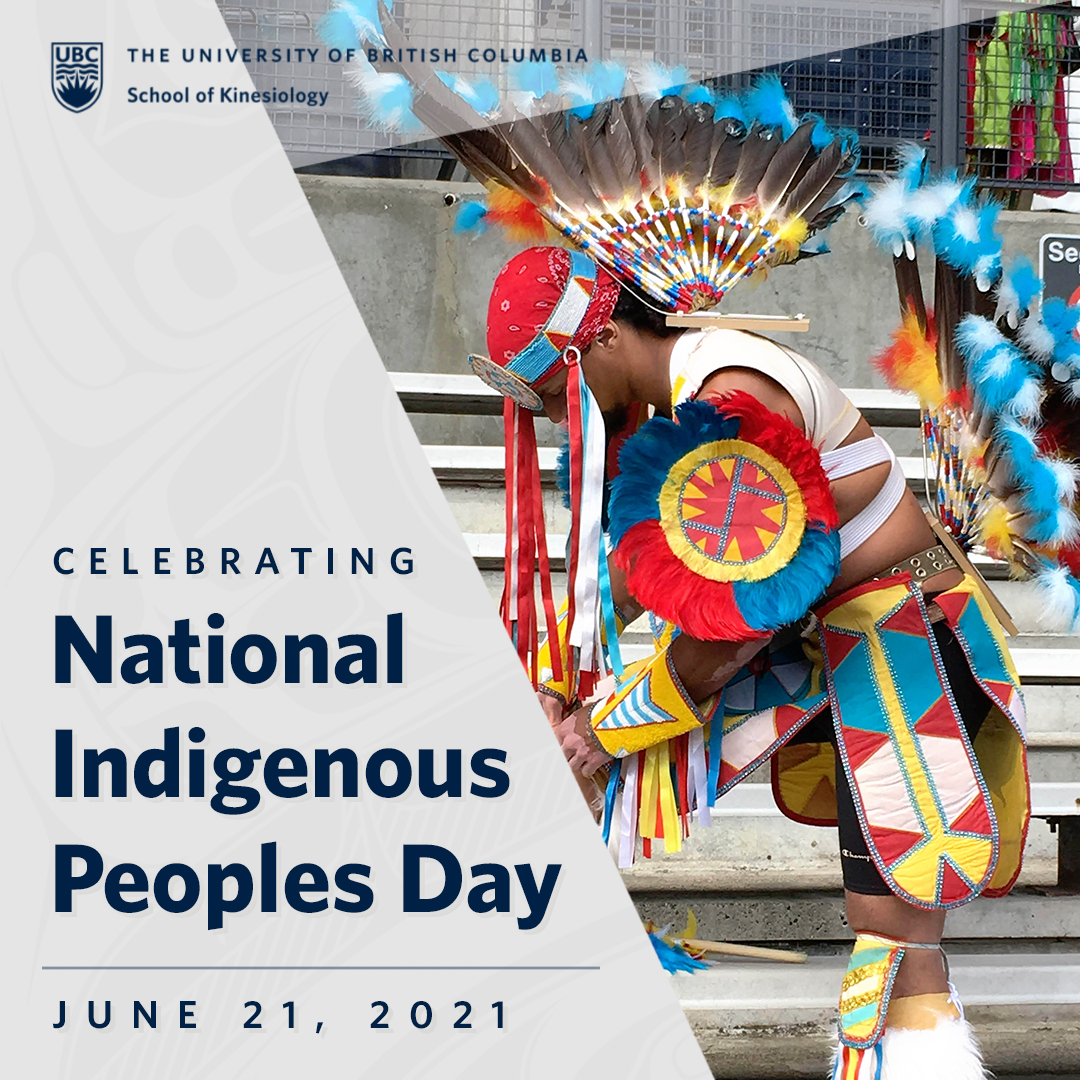
Today is National Indigenous Peoples Day (rcaanc-cirnac.gc.ca), celebrating the heritage, diverse cultures and outstanding achievements of First Nations, Inuit and Métis peoples.
There are celebrations and events across BC and Canada and I encourage you to participate in these events.
Here are some links to topics in the field of kinesiology:
- In partnership with First Peoples’ Cultural Council, Indigenous Physical Activity & Cultural Circle (IPACC) members of Indigenous Studies in Kinesiology created four Nlaka’pamuxcin Physical Activity videos featuring Elders in the Nlaka’pamuxcin First Nations community with the support from Stein Valley Nlakapamux School and piyeʔwiʔx kt / Beeya.wEE.hh kt Language Foundation Society. These videos, provided by Dr. Rosalin Miles, feature the singing voice of Harvey Dunstan and showcase Elders, Charon Spinks, Judy Hanna, Buster Adams, and Maurice Michell who share a story in Nlaka’pamuxcin, on being physically active on the land. By empowering Elders to speak their stories, these videos help revitalize traditional language and create resurgence in Indigenous knowledge, traditions, and heritage, which support community resilience. The videos may be found here.
- As part of National Indigenous History Month, the UBC Learning Circle featured Indigenous community leaders from across BC who talked about community sport and physical activity in their communities. The webinar entitled ‘Everyone is a Wellness Champion: Stories from the Rez’ may be viewed here: Everyone is a Wellness Champion: Stories from the Rez – YouTube.
- The UBC Learning Circle series continues this week with a webinar entitled “A bright future for Indigenous Sports. Register here.
- UBCLC June 3rd Wk Newsletter: Indigenous Day, Indigenous sports, events and more! (mailchi.mp)
- Some national level resources on sport can be found here: Team Canada National Indigenous Peoples Day Resources – Team Canada – Official Olympic Team Website.
In support of the Tk’emlúps te Secwépemc First Nation and First Nations across the country, and honouring the 215 children found buried at former Kamloops Residential School, we are providing orange ribbons to wear. I would like to send our very best wishes to all of our Indigenous students, their communities and faculty and staff on this important day.
With greatly honoured support from the First Peoples’ Cultural Council, Indigenous Physical Activity and Cultural Circle (IPACC) partnered with UBC Indigenous Studies in Kinesiology program to create four Nlaka’pamuxcin Physical Activity videos featuring Elders in the Nlaka’pamuxcin First Nations community. We also appreciate the support from Stein Valley Nlaka’pamux school and Piyeʔwiʔx kt Language Foundation Society.
These videos showcase the four Elders, Charon Spinks, Judy Hanna, Buster Adams, and Maurice Michell, who share a story in Nlaka’pamuxcin on being physically active on the land. By empowering Elders to speak their stories, these videos help revitalize our traditional language and create a resurgence in Indigenous knowledge, traditions, and heritage which supports community resilience. These videos create vital connections of our traditional language that can be passed onto younger and future generations, and we would also like to recognize Harvey Dunstan for allowing us to use his singing voice in the introductions. They also share ways community members can connect to the land, as a way to continue an overall healthy wellbeing. We would like to share with you the knowledge and history in both Nlaka’pamuxcin and English.
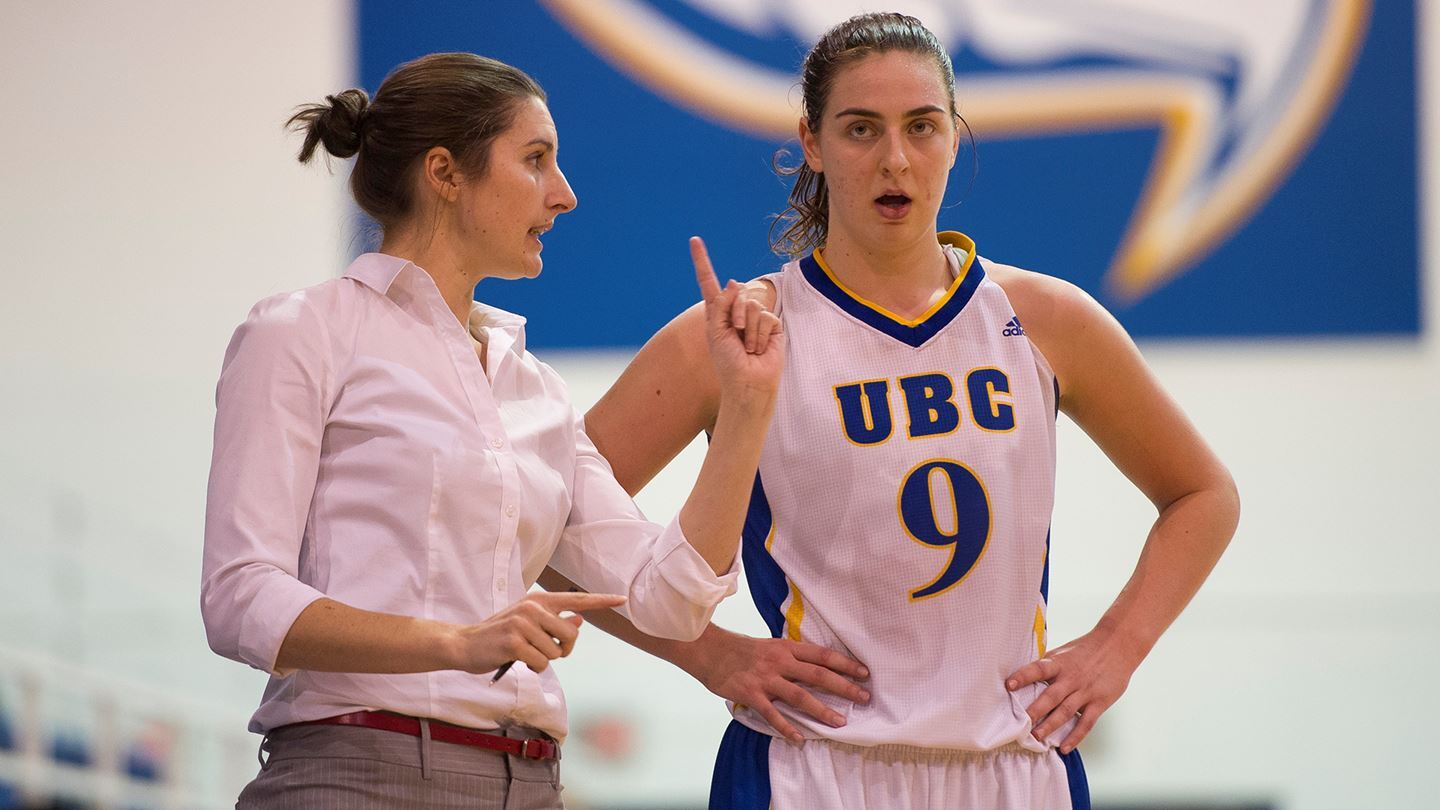
KIN alum, Carrie Watts, nee Watson (BHK ’04, BEd ’05 MKin ’11) was inducted into the UBC Sports Hall of Fame last month for her impact and accomplishments as a Thunderbird athlete. In the early 2000’s, Carrie was a driving force in the Thunderbirds return to national prominence under the guidance of her mentor and legendary, long-time head coach Deb Huband. Carrie led the ‘Birds on an extraordinary championship run in 2004, capturing the team’s first title since 1974, and earning National Championship MVP recognition. Carrie has lots to celebrate as she was also recently named Head Coach for the UVic Women’s the Basketball program.
To read more about Carrie’s achievements, click here.
o read more about the UBC Sports Hall of Fame welcoming the class of 2021, click here.
Jun. 10, 2021 – Congratulations to Pop-PA Lab member Matthew Fagan on his advancement to candidacy!
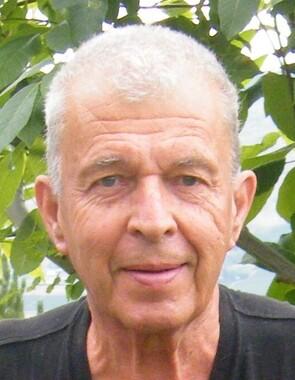 It is with great sadness that we announce the passing of Arnold Smith. Arnie graduated in 1962 with a Bachelor in Physical Education and a Master of Education in 1982. While at UBC Arnie played Thunderbird football under coach Frank Gnup.
Upon graduation, he embarked on a teaching and coaching career in West Vancouver. In June 1977 there was an urgent need for appropriate schooling for young children of Canadian parents working in Iran. Arnie was selected to be the principal of a school in northeast Iran, where he set out to find teachers, materials, and a suitable building for children in grades K to 12. Under difficult circumstances, Smith was successful in pulling this challenge together. However, in the fall of 1978 anti-Shah riots and strikes ravaged the country, and all Canadians were evacuated from Iran with only one bag per person. In an interview with Arnie in 2017, Arnie recalled this period of his career “an experience of a lifetime. It was …such an adventure I would never pass up . . . we had a cultural immersion and learning experience.”
With his Masters of Education, Arnie continued to teach, coach and serve as principal at West Vancouver Secondary School until his retirement. Later, while living in the Okanagan, Arnie hosted events for UBC Okanagan before he and his wife Kathryn relocated to Oshawa, Ontario to be near their daughter Karen and her growing family. Arnie is survived by his loving wife Kathryn, children Steven, Karen and Grant, son in law Brian, and grandchildren Sean, Lee and Robyn.
To read more about Arnie Smith’s life, please see:
https://kin.educ.ubc.ca/arnie-smith/
https://vancouversunandprovince.remembering.ca/obituary/arnold-smith-1082480074
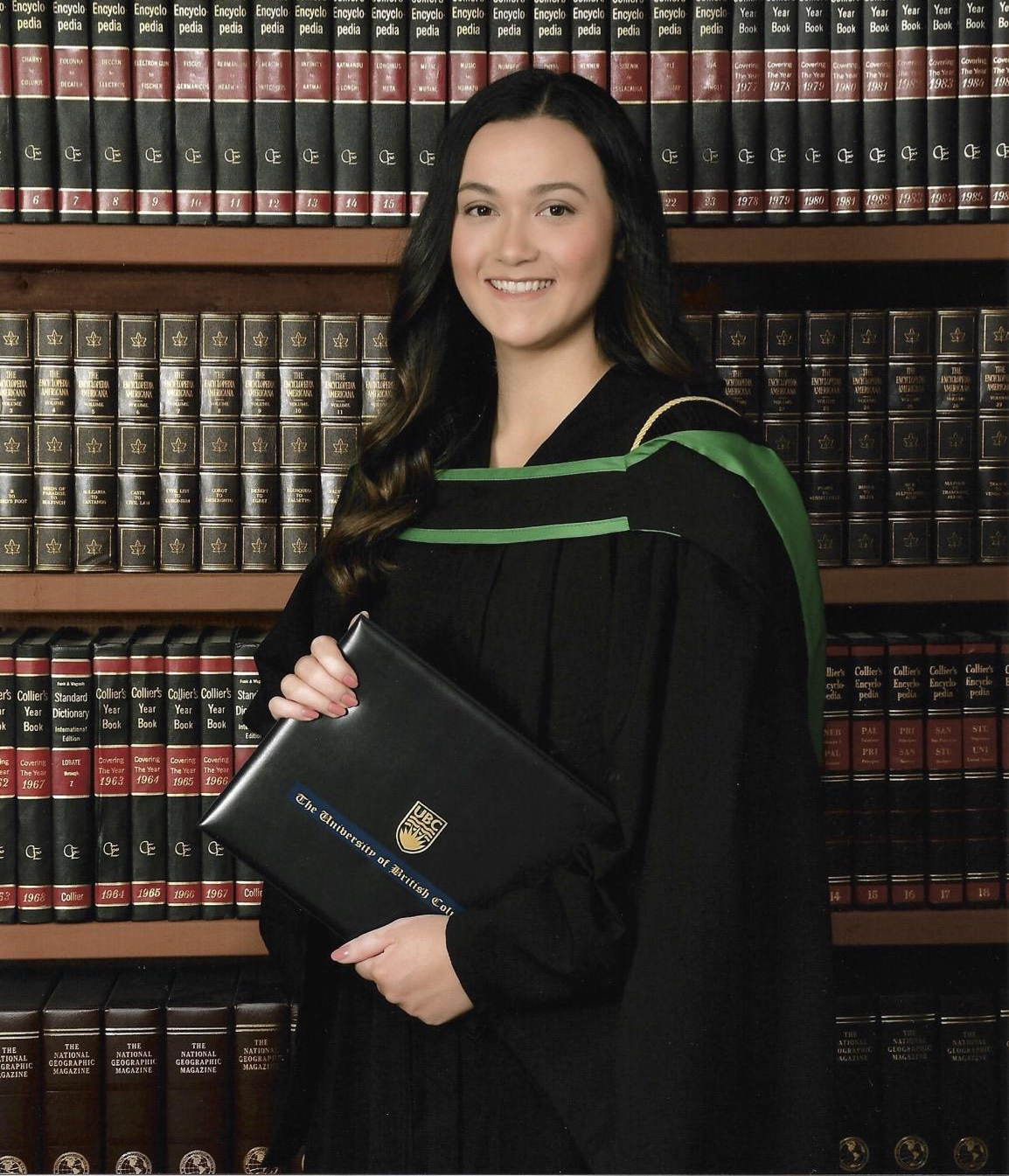 Laura is graduating with a BKin in the interdisciplinary stream. After graduation, Laura plans to continue her current research and pursue a career in medicine or counseling.
“I was fortunate to have the opportunity to conduct a directed study with Dr. John Kramer. I studied the diversity of sex and age recruitment within pain neuroimaging research. I am currently working on a related project as a research assistant in the Kramer lab at ICORD.”
Laura served as the volunteer coordinator for the Parachute Brain Waves program for the past two years. “This program features presentations (often by UBC KIN students) to elementary school classes on topics neuroanatomy, concussion and delivers messages of injury prevention.” She also volunteered with the “I’m Going to UBC” mentoring program for varsity athletes, as well as for Special Olympics, Prisoners’ Legal Service, the Brain Wellness Program and Wellness Outreach Program.
Laura was also “an athletic trainer for the Women’s varsity soccer team. While doing so, I rowed on the Women’s novice rowing team and the following year, I rowed for the Women’s varsity rowing team. I still enjoy doing various activities like road biking and beach volleyball.”
Laura would like to eventually achieve her academic goal of publishing her current research, as well as take the opportunity to travel and pursue more education after she graduates.
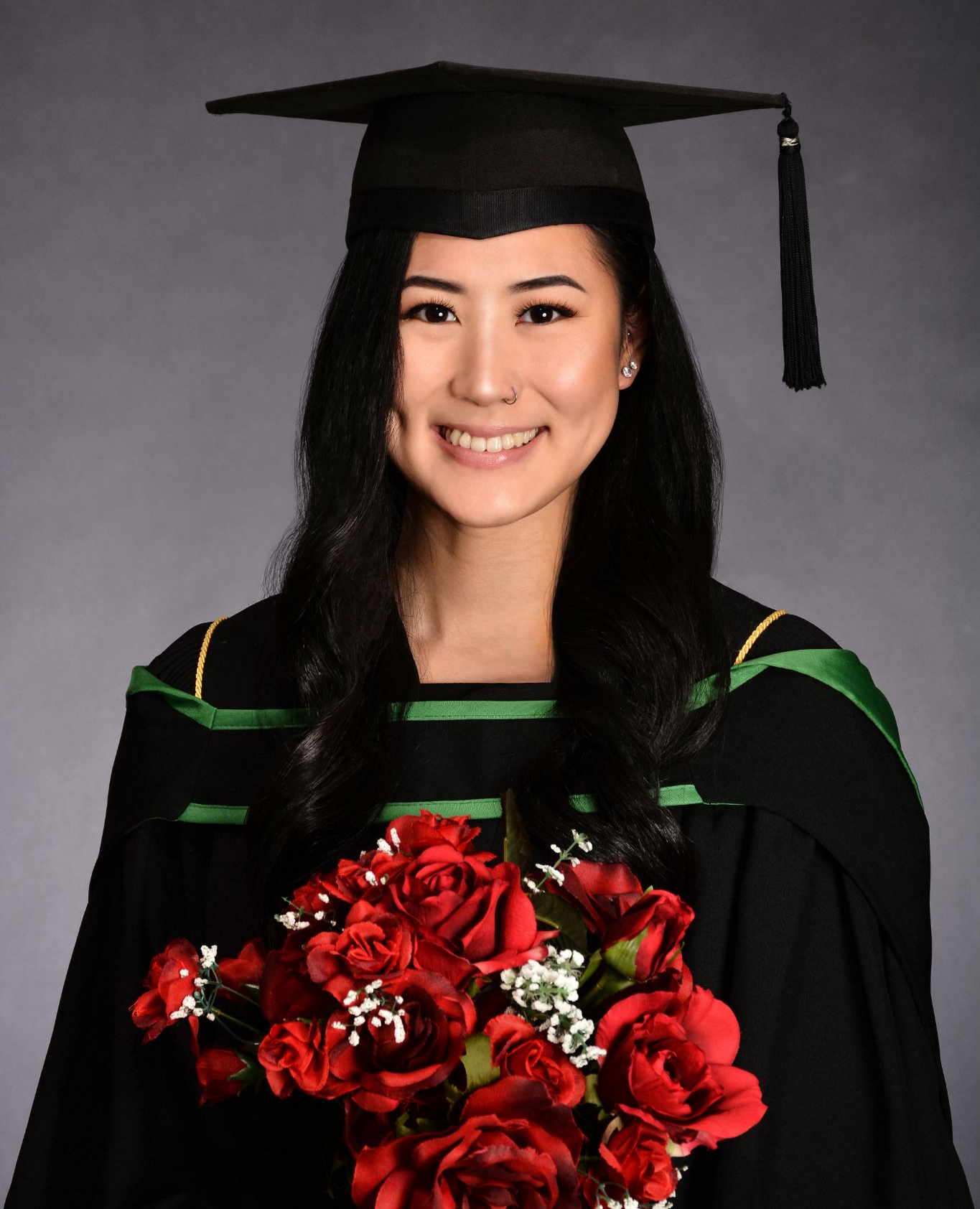 Sherry is graduating with a BKin in the interdisciplinary stream. Upon graduation, Sherry says “I’m excited to continue working with mission driven companies to create more meaningful experiences through experiential marketing, people and culture. Down the line, I hope to build something of my own centered around connection and empathy.”
As an active member of the KIN community, Sherry served as AVP Communications on the KUS, a KPAC Coach, a Campus Kinnections Mentor, and held many more roles in the student community. Sherry also created “KINterested”, a monthly virtual social event series designed to connect new and existing UBC KIN students. “I was determined to keep the fire alive and give incoming Kiners an unforgettable first year experience despite the circumstances of COVID-19.”
Sherry recognizes Elise LeBrun as her favourite mentor in the School. “Elise took me under her wing during my time as a KPAC Coach. She nurtured my growth as a student leader, created an environment where it was okay to make mistakes, and supported me as I explored an entirely new career path – leading to my first big kid job in the community building space, which all started in UBC KIN. I would truly not be here without her and all of her invaluable support throughout the years.”