Romeo Chua awarded a SCAPPS Fellowship in the Society

Romeo Chua awarded a SCAPPS Fellowship in the Society

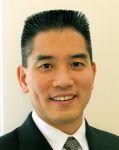
Romeo Chua was awarded a Fellowship in the Society  at the 2017 SCAPPS conference held in St John’s NL.

Fellows’ are recognized for making distinguished contribution to the advancement of the fields of psychomotor learning and sport psychology or who have given exceptional service to this Society. Erica Bennett and Chris Forgaard also presented at the SCAPPS conference under the ‘Young Scientist Presenters” category. Read Erica’s story here and read Chris’ story here.


OMiCS Team visits Science World

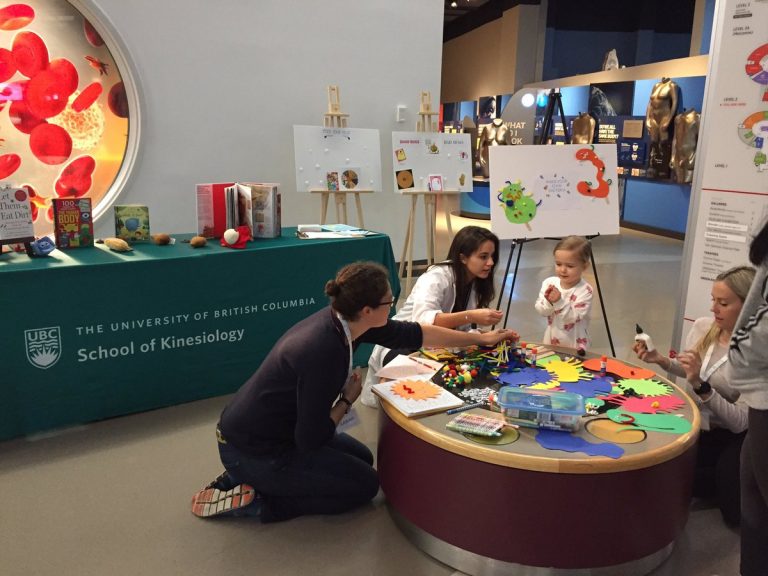
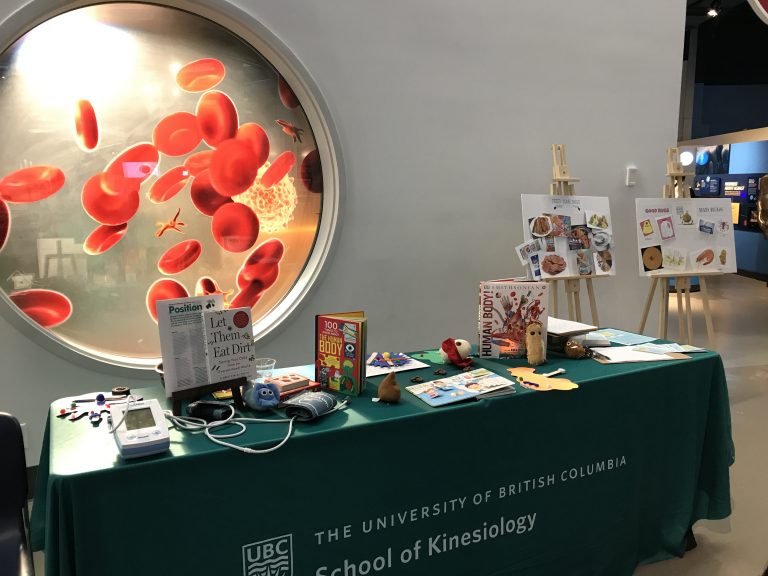
The Optimizing Movement in Children Study (OMiCS) visited Science World on October 7 to meet and engage with children for Science World’s Meet a Scientist day. The team chatted with kids and showed them how they can turn their passions for science into a future career!

Population Physical Activity Lab takes top spot at UBC Day of the Longboat

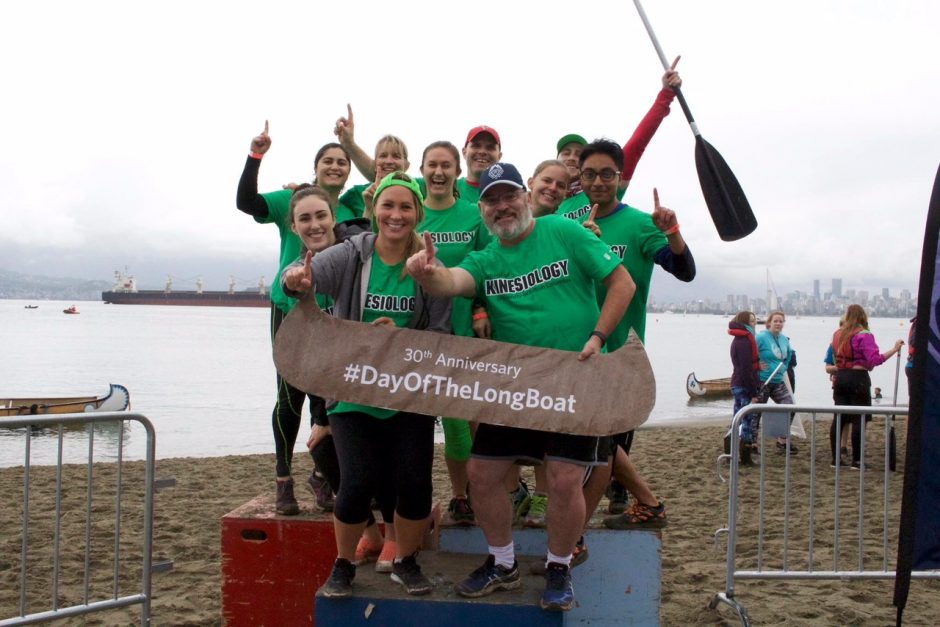
The Population Physical Activity Lab took the top spot at the UBC Day of the Longboat in the Staff category. Congratulations!


Test Registration

Day of the Longboat Champions!

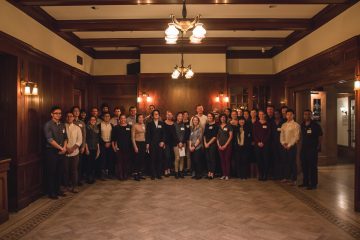
Sept. 30, 2017 – The Pop-PA Lab dominated the staff finals! What an amazing experience! (photo cred: @ubcrec)

(Untitled)

KINnected School Newsletter Submission (Internal Faculty & Staff Newsletter)

  • The KINnected Newsletter is an internal newsletter that will be sent to Faculty and Staff only. The purpose is to help us stay up-to-date with each other and share news internally.
  • Max. file size: 20 MB.

Penn, Gordie

Gordie Penn was part of UBC’s return to football credibility, greatness in fact, during the late 1970s. Under the coaching of Frank Smith the Thunderbirds evolved to the point where they reached the national championship Vanier Cup in 1978.
In 1975, Penn’s second season when the reclamation was beginning, he established a new UBC season rushing record while being selected a Canada West All-Star as UBC reached second place. In 1976 UBC emerged Hardy Cup champions with players such as Penn, Danny Smith and Kevin Konar leading the way. This was a good season for Penn as he was a Canada West All-Star, All-Canadian and was named Canada West Player of the Year winning the Frank Gnup Memorial Trophy.

1978 was a highlight year for Frank Smith’s ‘Birds. The CIS Coach of the Year led UBC to its first Shrum Bowl victory, the Hardy Cup and the Churchill Bowl to advance to the Vanier Cup, only to lose to Queens. Gordie Penn was selected MVP of the Churchill Bowl receiving the Maury Van Vliet trophy and after 38 years still holds one of UBC football’s oldest records, the record for career total offense – 5181 yards over five seasons.
Penn, whose father was in UBC Physical Education’s first graduating class in 1949, graduated from Phys. Ed. (Kinesiology) in 1978 and in 2017 was inducted into the BC Football Hall of Fame based upon his outstanding amateur football career.

Fred Hume
September 2017

A Salute to Retiring UBC Professor and Director Emeritus, Robert (Bob) Sparks

After exactly 37 years of extraordinary and wide-ranging service, Professor Robert (Bob) Sparks officially retired from the UBC School of Kinesiology on August 31.

Robert Sparks

A native of Massachusetts, Professor Sparks’ early years were highlighted by an active lifestyle of outdoor activity, a Bachelor of Arts degree in French from Wesleyan University, Middletown, Connecticut and four years of enlistment in the US Navy. He underwent basic training at Great Lakes, Illinois followed by Radioman school at Bainbridge, Maryland, scuba diver training at Coronado, California and Airborne Parachute Training at Fort Benning, Georgia. Following a tour in Vietnam, he instructed free fall parachuting for the Navy in Coronado and served as a member of the US Navy parachute exhibition team.

After completing his enlistment, he earned a commercial pilot’s licence and then enrolled in a Master’s program at the University of Massachusetts, Amherst (UMass) where he taught scuba diving, rock climbing and an outdoor adventure course. Utilizing his extensive experience in adrenalin pursuits, his thesis was titled “High risk sports: A philosophical investigation.” He entered a PhD program in 1976, but continued to teach outdoor education courses at Springfield College and scuba diving at UMass and in the Caribbean. After responding to an advertisement placed by UBC in the Chronicle for Higher Education, Professor Sparks began his career on the Point Grey campus in the fall term of 1980 with a full-time post that consisted of a unique combination of fifty per cent Assistant Professor in what was then the School of Physical Education and Recreation and fifty per cent as University Diving Officer (UDO), a position in which he was to coordinate, regulate and facilitate use of underwater diving as a research tool in the marine sciences. In this capacity, he conducted “check out dives” for faculty and students, developed diving regulations for the University, and helped found the Canadian Association for Underwater Science and the CAUS Standard of Practice for Scientific Diving.

During his first term of employment at UBC, he completed and defended his dissertation at UMass Amherst, titled “Intentional action in sport: A philosophic investigation” and was awarded his PhD in the spring of 1981. He taught and conducted research in philosophy of sport and socio-cultural studies and instructed underwater diving until 1987, when a change in the UDO position resulted in it being no longer compatible with an academic position. Confident that Sparks had a great deal to offer, then School director, Dr. Robert Morford, appointed him full-time to the School, at which point he transitioned into mass communications, health promotion, sport sponsorship and marketing, in which areas he developed an active program of funded research.

In 1995-1996 he took a leave of absence and taught courses in sport management and conducted research as a senior lecturer in the School of Physical Education at the University of Otago in Dunedin, New Zealand. It was to be a transformational move. “The position opened my eyes to the importance of leadership in university administration and gave me the opportunity to study the literature in this area,” said Professor Sparks recently. “On returning to Canada, I decided to move into administration as the next phase of my career. I took the position of Associate Director Undergraduate Affairs for the School in 2001-2004, thinking this would give me leadership experience and help me prepare for a leadership post in Canada or the US.”

As it turned out, he didn’t have to look beyond the familiarity of Point Grey to secure a leadership position, as the opportunity arose at UBC in 2004. During his two terms as director (2004-2015), he committed to a distinctly collaborative and distributed leadership style, in which faculty members were invited to participate directly in the planning and operations of the School. This period saw the appointment of 11 extraordinarily talented teachers and researchers, as well as several full-time staff to oversee various community, alumni and student service initiatives that aligned closely with the University’s overall strategic plans. These initiatives included the expansion of existing programs founded under the leadership of previous directors, and the creation of new programs in student development and advising, alumni engagement, international student recruitment and co-op education. He also worked collaboratively with other members of the university community to undertake important research, teaching and community outreach initiatives made possible by Vancouver serving as host city for the 2010 Olympic and Paralympic Winter Games. This included the founding of the Centre for Sport and Sustainability as a UBC legacy of the Games.

In 2008 Professor Sparks began an engagement process with students and faculty to change the name of the School, an initiative that proved to be a lengthy and at times contentious undertaking, but one that eventually garnered wide support of alumni and students alike. The changing of the name to the UBC School of Kinesiology was approved by Senate in April of 2011, signalling an important juncture in the School’s decades-long evolution.

Professor Sparks himself served for three terms on the University Senate and participated in various Senate committees and other groups in pursuit of enhancing the University’s learning and research environments as well as its service to alumni and the wider community. As chair of the Senate Academic Building Needs Committee he helped raise the profile of facility issues at the Point Grey campus, and spearheaded an action plan to involve the Faculties and Senate more directly in campus planning and development. In his capacity as Chair of the Senate Admissions Committee, he worked closely with the Faculties and administration to monitor and update admissions policies and support the University’s strategic priorities in admissions innovation, campus diversity, Aboriginal engagement and international engagement. He actively supported the Senate Ad Hoc Committee on Student Mental Health and Wellbeing and contributed to a related Senate review that resulted in increased awareness and responsiveness by Senate committees. In his capacity as director, he ensured the School had its own strategies in each of these areas and was engaged with the University’s core strategic initiatives including a new central administration focus on health.

“There are few people, if anybody, who have witnessed and been directly involved in as much transformation as has Professor Bob Sparks, both within the School and the University as a whole,” said Director, Rob Boushel. “His contributions over the last 37 years as a faculty member, leader and ambassador have been vast, wide-ranging and altogether extraordinary. His exemplary personal integrity as a leader and genuine dedication to the School have been equally impressive. On behalf of the entire School of Kinesiology community, I am honoured to thank him for his service and congratulate his many achievements”.

In retirement, Professor Sparks and his wife Kathy, who have three adult sons, continue to lead active outdoor lives, and reside in Vancouver.