Hey everyone
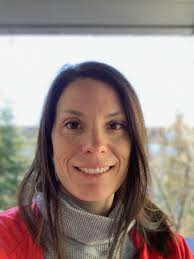
! My name is Katie, I am a 4th year Kinesiology student and am in the dual degree program in the Faculty of Education. I am a transfer student so this is technically my second year at UBC. Growing up, I knew that I wanted to be a teacher because I loved working with children.
I’m in Kinesiology because it perfectly combines my love of being active with my desire to teach. I’m now finishing my BKin and aim to complete my teaching degree the year after.
Once I arrived at UBC I made a point to become involved and make connections; so I volunteered with Active Kids and UBC Rec. This year I took another step by transitioning into an Active Kids coach role and joining the KIN Senior Orientation team.
I wanted to challenge myself by stepping into a bigger role and meet more people. I’d always had difficulty with public speaking and this role allowed me to step outside of my comfort zone to practice this skill. I felt nervous speaking at Imagine Day, but I persisted as I knew I could help new students, whose shoes I’d stood in only one year before!
Weeks after Imagine Day one of my peers approached me, thanking me for speaking that day and mentioning that many aspects of Imagine day had resonated with them. That simple thank you helped me to understand the important part I played as a KIN Senior Orientation leader. I’m especially proud of my transfer orientation leaders team for launching the first annual ‘welcome back’ pancake breakfast!
As a senior orientation leader I worked with a diverse group of staff and students. I learned that a leader isn’t necessarily the person with the loudest voice. And it’s not necessarily the person who speaks at the front of the room. Often the leader is the one doing the work behind the scenes who no one sees. Whichever leader you are, know that you will leave a lasting impact on your team and the community!
I really enjoyed developing new leadership skills and applying them in this role. Serving as a Senior Orientation leader has created many lasting and treasured memories for me – building strong bonds with likeminded and caring people allowed our team to develop even deeper more meaningful friendships. I’m excited for the next team of Senior Orientation leaders to come together and create more lasting memories for the KIN student body, for themselves, and for the School of Kinesiology.

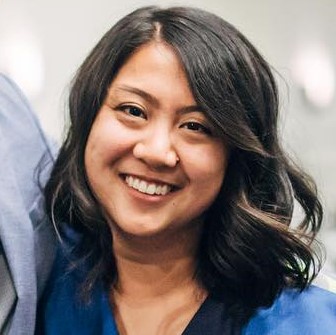
Hello, my name is Riya, and I’m a first-year student in the UBC School of Kinesiology. Being a student in Kinesiology at UBC has been my dream since I was 15 years old. I was looking forward to attending a university that is globally recognized and to study in an area that I am passionate about. I chose Kinesiology because it combines my passion for sports and science — having been a student athlete for many years, kinesiology allows me to be involved with sports in my studies even if I am not playing.
My first two months at UBC have been truly exceptional. I am living in residence and I absolutely love every aspect of it, especially my roommates and the UBC community’s positive, welcoming atmosphere. My favourite class this semester is Dr. Anne Lasinsky’s KIN 110 – I love learning about anatomy and the human body. Dr. Maria Gallo’s KIN 120 class is another favourite, as I find the content engaging and the labs are exciting to participate in! Although my first midterm season was a bit of a struggle, I still enjoy every part of university. I am currently scorekeeping at Varsity Athletics games.
My initial goal after completing my BKIN was to attend med school to become a Sports Medicine Physician. However, after hearing KIN alumni present on their career paths in Dr. Gallo’s class, I am further reflecting on my goals – they shed light on the numerous and diverse career options that are available to those with Kinesiology degrees! Listening to alumni who have had similar educational experiences, and what they did to achieve their career goals, has allowed me to consider how to prepare for and look forward to the path ahead.
student profile
National Kinesiology Week runs from November 11-18, 2019
Evidence-based studies tell us that if we were to decrease the number of inactive Canadians by even 10%, we’d see a 30% reduction in mortality and a major savings in health care.
It is estimated that more than $2.4 billion, or 3.7 per cent of all healthcare costs, were attributed to the direct cost of treating illness and disease due to physical inactivity.
The financial impact of poor health amounts to a loss of more than $4.3 billion to the Canadian economy, and the negative repercussions of inactivity cost the healthcare system $89 billion per year in Canada. Research shows us that properly structured and supported exercise programs, designed and delivered by a kinesiologist can:
- Reduce the risk of high blood pressure and heart disease by 40%
- Reduce the incidence of type 2 diabetes by 50% and be twice as effective as standard insulin in treating the condition
- Help the function of muscles for people affected by Parkinson’s disease and Multiple Sclerosis
- Decrease depression as effectively as pharmacological or behavioural therapy
- Reduce the risk of stroke by 27%
- Reduce the risk of colon cancer by 60%
- Reduce mortality and risk of recurrent cancer by 50%
- Reduce the likelihood of developing Alzheimer’s disease by almost 40% compared to those who are less active.
Sponsored by the Canadian Kinesiology Alliance, this year’s theme is “Move Better, Live Better” and supports World Diabetes Day which will be hosted at UBC on November 14th, 2019.
The School of Kinesiology conducts research on diabetes and is an active member of the research cluster known as the BC Diabetes Research Network. The research cluster conducts research that is patient-centred, including physical activity and nutrition-based approaches to preventing diabetes; to the prevention of the complications of diabetes; as well as on researching Islet biology & cell therapy.
Learn more here: https://diabetesbc.ca/about-us/research/
Event Details
- Start: 11 November 2019 10:45 AM
- Venue: War Memorial Gymnasium
Since the opening of the War Memorial Gym in 1951, The University of British Columbia has held a ceremony commemorating November 11. This year, 2019 will mark sixty-eight years that The University of British Columbia has hosted a Remembrance Day ceremony. This special ceremony is an opportunity for faculty, staff, students and members of the on and off-campus community to honour and remember all those who served in times of war, military conflict and peace. All are welcome to attend.
Doors open at 10am and ceremony begins at 10:45am.
For more information click here.

UBC’s war dead included Physical Education graduate, James Douglas Hamilton. After serving as a navy patrolman in the North Atlantic during World War II, Hamilton enrolled in the UBC Canadian Officer Training Corps while studying for his Physical Education degree, and returned to action as a lieutenant in the battle for the Korean Peninsula. After learning that he had been killed in action, his friends and classmates established an undergraduate bursary, the Lieutenant James Douglas Hamilton Prize, in his memory.
Nov. 5, 2019 – Congratulations to Masters student Kelly Wunderlich on passing her proposal defence! Well done!
Dr. Shelina Babul’s journey to become a North American leader in concussion recognition, response, management and prevention began over a decade ago, in response to parents of children with concussions, looking for answers. They had left the health care system feeling confused, frustrated and scared; and without any better understanding what was wrong with their child.
Concussion is the most common form of head injury, yet it is widely under-recognized and under-reported. Shelina quickly recognized that this was a significant public health issue, as many healthcare providers did not know how to identify or respond to concussions. Nor did they know the proper protocols to follow. How a concussion is handled in the minutes, hours and days after injury can significantly influence the extent of damage and recovery. They key to successful recovery for the patient is the immediate accurate detection, diagnosis and expert follow-up.
In response to this healthcare gap, Shelina utilized her knowledge and training in the UBC School of Kinesiology and her experience as a sport injury specialist. After completing an indepth environmental scan and conducting numerous focus groups, she launched the Concussion Awareness Training Tool (CATT), in 2013. CATT is a comprehensive resource that contains evidence-based concussion information for medical professionals, workers, coaches, school professionals, parents, caregivers, and athletes. Shelina’s philosophy for proper concussion management involves an individualized approach to symptom management, as no two concussions are alike. CATT was designed to empower the patient and their support systems to take an active role in their own recovery from this invisible injury.
Currently Shelina is a Clinical Associate Professor in the Department of Pediatrics at UBC and is the Associate Director, Sport Injury Specialist, BC Injury Research and Prevention Unit at BC Children’s Hospital.
To improve your knowledge on good concussion management, visit cattonline.com
To follow more of Shelina’s work, you can follow her on Twitter @cattonline or @sbwellr
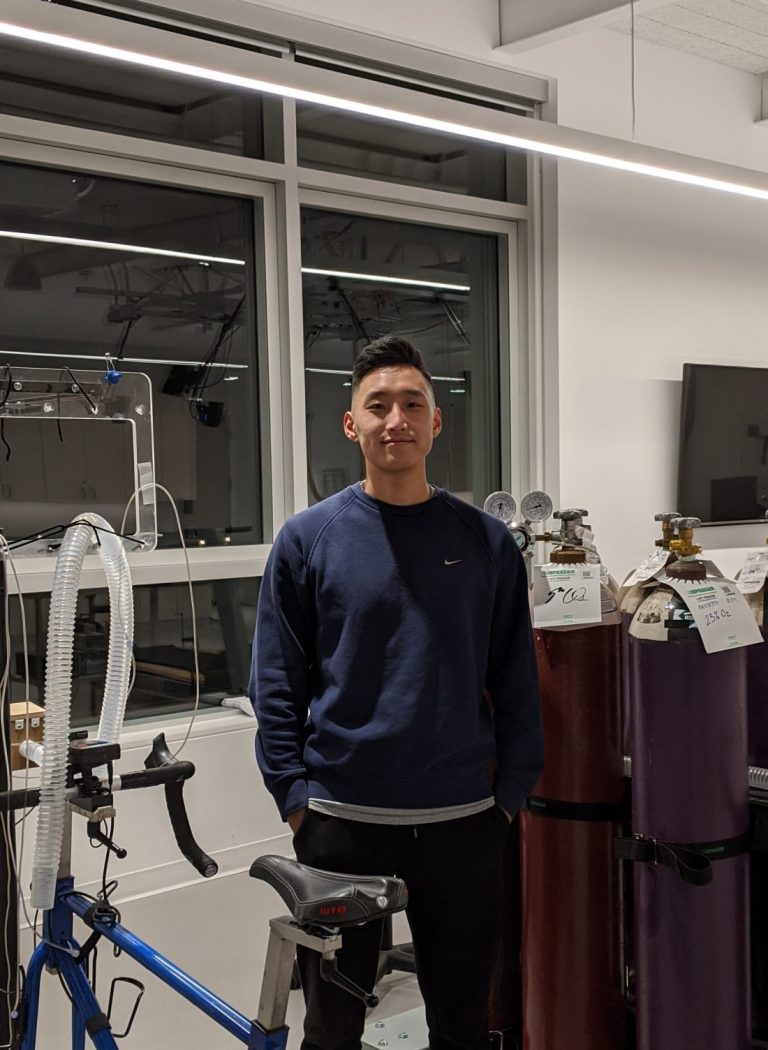
Caitlin Geary is an Indigenous alumnus who graduated with her BKIN in May, 2019. While she was an undergraduate student, she started to work in Professor Bill Sheel’s Health and Integrative Physiology Lab the summer before her fourth year, after receiving an NSERC Undergraduate Student Research Award. She chose to study Kinesiology because it aligned with her interests in health and exercise, and because she was an athlete most of her life. She was the lead author of a recently published peer-reviewed article in the Journal of Physiology that compared diaphragm fatigue between the male and female respiratory system.
Outside of her studies, Caitlin ran with UBC’s track and feld team racing in the 400m and 800m run. “I’ve always enjoyed track because it pushes you physically and mentally. There is always going to be a workout or a race that forces you out of your comfort zone and beyond what you think you are capable of,” she says.
She credits the mentorship and guidance that she has received in the lab as a key to her success: “I am extremely grateful for the opportunity I have had to work in professor Bill Sheel’s lab. Joseph Welch, one of Bill’s PhD students, mentored me throughout my entire KIN 499 project. I would not have been able to complete the study without his expertise and guidance… [Bill] keeps an open-door policy and is always available to help guide you through challenges.”
To give back to the community that has supported her endeavors, Caitlin is part of YWCA’s Circle of Sisters Indigenous Mentorship Program, where she spends afternoons with Indigenous girls ages 12-18 at their school. When asked about the importance of this program, she says: “The program gives the opportunity for us to explore our culture and help them learn valuable life skills in a safe, supportive environment. There are so many societal expectations about what it looks like to be Indigenous and what you should be good at or interested in as a female…it’s important to me to show them there is no limit to what they can do. You can be Indigenous, do research, get a degree and be an athlete”.

On October 25th, 2019, President Santa Ono invited 28 members of the UBC student body to breakfast at his residence in Norman Mackenzie House. This was a rare opportunity for students to interact with Professor Santa Ono and their peers. The breakfast was informal in nature and provided an opportunity for students to meet Professor Ono and to discuss ideas and experiences at UBC.
Three of KIN’s students were invited to attend: Christy Wee, Kathryn Lehmann and Grant Phillips-Hing.
Grant Phillips-Hing and Christy Wee gave us an inside scoop on their experiences at breakfast with Santa. “It was a fantastic event! Everyone arrived before the appointed breakfast hour of 7:30am to gather in the main area to meet each other and socialize. Fun fact: this area was the same room that was used for the Fifth Economic Leaders Meeting in 1997. We had the opportunity to chat with other student leaders around UBC and talk about what they’ve been up to!”relays Grant.
Santa came in to the room at 7:30am sharp and they sat down to breakfast around a very large table that was set in the middle of the room. The president started out by explaining that he hosts these events to hear from student leaders to receive insight on their experiences and to have one-on-one conversations with them.
“People brought up a number of really interesting, thoughtful topics of conversation, including discussions about gender equity, minority group representation and opportunities, Indigenous rights, and how the school addresses sexual misconduct. It meant a lot that the President paid close attention to each person as they spoke, and responded to each issue individually. He often responded with concrete plans to take action, or invited the student to follow-up with him via email. It was so amazing to hear about the fantastic and diverse student-led initiatives that exist on our campus,” Christy declared excitedly.
Grant took his turn to advocate for more counsellors in residences. “I’ve been in Totem Park for three years, and in my first year the counsellor in residence program didn’t exist. It was implemented half way through my second year and was fully integrated by my third year. I’ve seen the incredibly powerful impact it has had on the community in terms of utilizing the service and normalizing counselling. There are currently only 2 counsellors in residence (Totem Park and Marine Drive) and I advocated for one in every residence hall. I also asserted that there is a need for more diverse professors to engage with students in residence. We currently have a fantastic professor in residence, Michael Griffin, but he specializes primarily in philosophy. I stated that although it’s a fantastic program, it would be great to be able to see more faculties (especially KIN) represented in residences to help normalize the prof-student interactions in first year students.”