Congratulations Dr. Miles, Dr. Hare, Dr. Warburton and team!
Congratulations to Dr. R Miles (Principal Applicant), Dr. Jan Hare (LLED; Principal Applicant), Dr. Darren Warburton (KIN, Principal Applicant) and their team on receiving a $100,000 Development Grant from the CIHR Indigenous Component of Healthy Life Trajectories Initiative!
Their team includes: Dr. Shannon Bredin (KIN), Dr. Moss Norman (KIN), Dr. Tanis Mihalynuk (HealthLinkBC), P Oh (University of Toronto), and Dr. Ryan Rhodes (University of Victoria; Co-Applicant). The funds will be used to support their project “Indigenous Health and Wellness through Empowerment and Self-Determination.”
The Development Grants are intended to support communities to come together with self-identified relevant organizations to establish needed expertise to support Indigenous-driven research and will provide support for workshop preparation activities, community personnel support, and travel support to attend the workshop.
Brandon Rasman
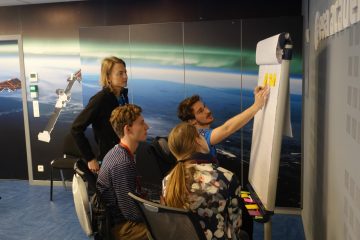
Brandon Rasman (in blue) at a recent training course with the European Space Agency
Photo credit: ESA
Supervisor/Lab: Dr. Jean-Sébastien Blouin, Sensorimotor Physiology Lab
Graduation Date: November 29, 2016
I’m currently conducting research at Erasmus Medical Centre (Erasmus MC), in Rotterdam, the Netherlands, as part of an international collaboration which includes Dutch and Canadian scientists. I’m working with Dr. Patrick Forbes (Erasmus MC, a former postdoctoral fellow at the UBC School of Kinesiology), Prof. Maarten Frens (Erasmus MC), and Prof. Jean-Sébastien Blouin (UBC Kinesiology). My current projects entail gravity-related experiments in which we will test human behaviour in altered gravity conditions on parabolic flights. These studies will be conducted in partnership with two parabolic flight campaigns organized and operated by the European Space Agency (ESA).
1) 1st International Space Life Sciences Working Group Parabolic Flight Campaign (IPFC)
I’m a co-coordinator of a research team at Erasmus University Medical Centre (Erasmus MC) in Rotterdam, The Netherlands, who have been selected to participate in ESA’s upcoming parabolic flight campaign (IPFC). In this campaign, experimenters will be provided with normal (1g), hyper (1.8g) and partial (0.25, 0.5, 0.75g) gravity environments through parabolic maneuvers onboard the Novespace Airbus A310 ZERO-G. The objectives of this campaign are to 1) further scientific knowledge of the influence altered gravity levels have on life processes and 2) improve the preparation for future human exploration missions. The campaign includes research teams from a variety of different universities and institutes across Europe and is scheduled to take place May 28th – June 8th, 2018 in Bordeaux, France.
My team is investigating how the brain adapts eye movement control when faced with novel gravity signals. We will be measuring the eye movements of human participants during different levels of gravity while providing vestibular stimulation.
2) Fly Your Thesis! 2018 (FYT2018)
I’m also part of a student team at Erasmus MC who have been selected to participate in the Fly Your Thesis! 2018 parabolic flight campaign, organized and sponsored by the ESA Education Office. The Fly Your Thesis! (FYT) programme gives master and PhD candidates the opportunity to fly their scientific experiment or technological research in microgravity conditions. Our team, G-REACH, were one of two teams selected for this year’s campaign. In this campaign, experimenters will be provided with normal (1g), hyper (1.8g) and micro (0g) gravity environments through parabolic maneuvers onboard the Novespace Airbus A310 ZERO-G. The campaign is scheduled to take place October 22nd – November 2nd, 2018 in Bordeaux, France.
We are investigating how the brain combines different sensory information in microgravity environments to perform motor tasks. Specifically, team G-REACH will study how humans detect errors and adapt upper limb reaching movements without the presence of normal gravitational cues.
Josh Bovard
Name: Josh Bovard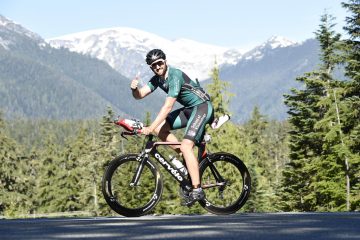
Area of study: Exercise physiology
Supervisor/lab: previously Dr. Bill Sheel, currently Dr. Rob Boushel (PhD)
Graduation date: August 2017 (MSc)
Tell us about your background. Where did you do you undergrad? Where are you from?
I am born and raised in Vancouver. I completed my BSc in Physiology at McGill University in Montreal.
What made you decide to pursue graduate studies at UBC School of Kinesiology?
UBC’s School of Kinesiology features world leaders in exercise physiology research. After gaining a comprehensive understanding of physiology through my undergraduate studies, I wanted to apply this through clinical research at the human level. Dr. Sheel’s integrative approach to health and physiology was an appealing opportunity to apply my understanding of physiology in a meaningful way.
What do you hope to do after graduation?
I am excited to continue my graduate studies at UBC while working as an Exercise Physiologist, together pursuing a career as a clinician-scientist. During my PhD with Dr. Rob Boushel, I will be building off the integrative exercise physiology knowledge and skills developed during my masters and applying it towards the emerging field of exercise omics, which lies at the intersection of innovation, physiology, bioinformatics, and medicine. This is an exciting opportunity to conduct translational research in biomolecular markers of exercise (defining the “exercise responsome”), precision exercise medicine/prescription, and integrative determinants of oxygen uptake in humans.
Can you tell us some details about the photo and bit about your hobbies/past times?
The photo is from the 2016 Ironman in Whistler, Canada. I am happy to say that, after lots of swimming, biking, and running, I finished! My hobbies are pretty standard for a Kinesiology graduate student. You can find me exploring the mountains and backcountry with my dog, Kibo, staying active running and biking, travelling, or settling down on the couch for a science fiction book
New Paper Out
Feb. 6, 2018 – New paper out on the ‘Effectiveness of active school transport interventions: a systematic review and update’. Read it here.
Dr. Darren Warburton and team receive CIHR Catalyst Grant for Indigenous Approaches to Wellness
Congratulations to Dr. Darren Warburton (KIN; PI) and his team on receiving a $109,911 CIHR Catalyst Grant to study Indigenous Approaches to Wellness!
His team includes Dr. Jan Hare (LLED; Co-PI), Dr. Shannon Bredin (Co-applicant; Knowledge User; KIN), R Miles (Principal Knowledge User), Dr. Moss Norman (KIN; Co-Applicant), P Oh (University of Toronto; Co-Applicant), Dr. Ryan Rhodes (University of Victoria; Co-Applicant) and Gail Sparrow (Collaborator; Knowledge User).
The aim of this Catalyst Grant is to provide seed money to support research activities related to Indigenous approaches to wellness which represent the first steps towards the pursuit of more comprehensive funding opportunities (e.g., operating grants). This grant funds researchers who, in collaboration with the Indigenous community, will develop, evaluate, and build on existing tools and methods to better incorporate Indigenous concepts of wellness in health research designs.
Best wishes to Dr. Warburton and his team as they launch their research!

Dr. Darren Warburton
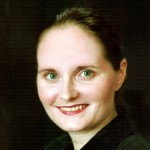
Dr. Shannon Bredin
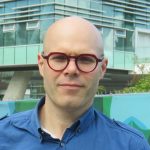
Dr. Moss Norman
UBC Research + Innovation: 24-hour Movement Guidelines for the Early Years animated video
Feb. 2, 2018 – The new, integrated 24-Hour Movement Guidelines for the Early Years (0-4 years) combine the movement behaviours of sleep, physical activity, and sedentary behaviour. In order to help with dissemination efforts, Dr. Guy Faulkner, Dr. Erica Lau and PhD student Negin Riazi have developed a short animated video about the guidelines. To learn more about the project and to view the video, check out the UBC Research + Innovation news item.
Congratulations to Dr. Maria Gallo, 2018 Hall of Fame inductee
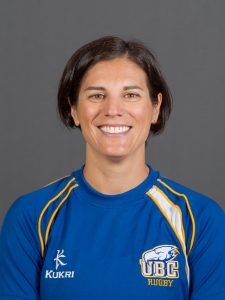
Rugby Canada has announced the 2018 Hall of Fame inductees, including Maria Gallo. She is the second woman to be inducted into the Rugby Canada Hall of Fame. Inductees are recognized for their contributions and influence, both on and off the pitch, and growth of the sport over the last few decades.
Read more in the original article on the Rugby Canada website.
UBC Masters in High Performance Coaching and Technical Leadership: Helping Canada Win Medals
With the Winter Olympics only weeks away, Canada looks to lead the world. The Olympic Games gives Canadians an opportunity to feel inspired and proud of our athletes’ accomplishments. But behind each athlete medal is a sport system that is supported by coaches and technical leaders who strive to innovate and create world class daily training environments in which athletes can excel. Entering its 4th year of programming, the School of Kinesiology, at the University of British Columbia, has supported over 50 of Canada’s coaches and technical leaders in its Masters of High Performance Coaching and Technical Leadership program.
“This program is unique in Canada, targeting coaches or technical leaders who have demonstrated tremendous experience in sport”, said David Hill, Director of System Excellence for the Canadian Sport Institute Pacific. Many of the coaches enrolled in the program have had experience as an athlete, coach, or leader at the Olympic and/or Paralympic Games. “Our students are lifelong learners who are motivated to improve their development and earn an academic credential at one of Canada’s premier universities”, added Hill. The program is on the cutting edge of Canadian sport, examining mechanisms to track athletes toward podium performances and gold medal profiling. There is also a heavy emphasis on leadership development and the ability to enhance coaches’ effectiveness in helping athletes to achieve their maximum potential. “Often the biggest impact for the athlete is a coach who works with the athlete in a trusting environment. This foundational coach-athlete relationship helps to enable the athlete to push the envelope within their sport”, said Dr. Shaunna Taylor, Chair of the Canadian Sport Psychology Association (CSPA) and instructor in the program. “We uphold the highest ethical standards, requiring our coaches to register as professional coaches with the Coaching Association of Canada”, added Hill.

Recent analysis of Canada’s targeted sport excellence strategy by Sport Canada has demonstrated the impact that Own the Podium (OTP) has had in helping to guide resources toward medal performance. Part of OTP’s initiatives is for sport leaders to examine data-driven and evidence-based research that informs athlete development and progression toward Olympic medals. “Many of our students have been sought by their National or Provincial sport organizations to assist in creating evidence-based programming to help athletes progress to higher levels in sport”, stated Dr. Andy Van Neutegem, a UBC instructor and OTP High Performance Athlete Advisor.
The School of Kinesiology’s Graduate Advisor and HPCTL Program Director, Dr. Maria Gallo, was instrumental in establishing the program at the University of British Columbia. Gallo complimented the student cohort stating: “These mature graduate students from diverse backgrounds and sports have enriched the learning environment of the program and have contributed to the translational knowledge we are trying to foster with this Masters. This world class program is impacting how we coach our current Olympians and our Next Gen athletes”.
Registration for the 4th cohort of coaches opens February 1st. For more information on the UBC Masters in HP Coaching and Technical Leadership please follow the link below.
The animated video for the 24-Hour Movement Guidelines for the Early Years is out now!
Jan. 30, 2018 – In collaboration with UBC Studios, Negin Riazi, Dr. Erica Lau, and Dr. Guy Faulkner have developed an animated video about the new, integrated 24-Hour Movement Guidelines for the Early Years (0-4 years). These guidelines address the interplay of movement behaviours through the whole day. Check out the full video on Facebook, Twitter, or YouTube!
Introducing the new Canadian 24-Hour Movement Guidelines for the Early Years (ages 0-4): Find out what a healthy 24 hours includes for your child.https://t.co/H27oOk3SXv pic.twitter.com/rjL5odAEBT
— University of British Columbia (@UBC) January 26, 2018
Also check out the mini videos for each age group including Infants, Toddlers, and Preschoolers.
Infants
Toddlers
Preschoolers