Three Kin Alumni to compete at Track and Field World Championships

The Pop-PA Lab @ the Nat

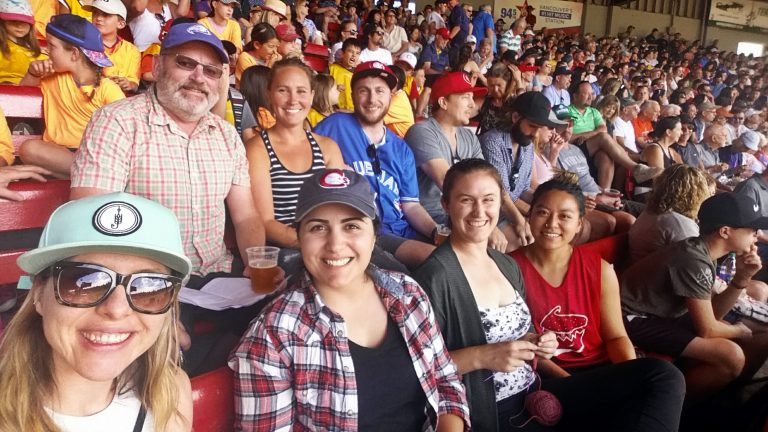
Jul. 19, 2017 – The lab crew enjoying some summertime baseball.

Durante, Dave

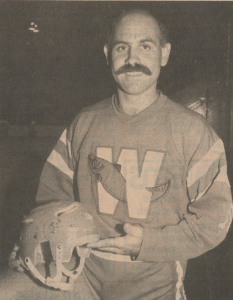
Dave Durante, a 1976 UBC Physical Education graduate, ranks as one of this faculty’s most versatile athletes, which is saying something.

While a student Durante played hockey for UBC, not the Thunderbirds but the Braves, during the days when UBC iced two hockey teams. Even though a good hockey player, Dave’s real sport was lacrosse as he came from a lacrosse playing family. In fact Dave Durante is considered one of this country’s all-time greatest lacrosse players.

It started in 1971 when he starred with the Richmond Roadrunners, national champions and still considered one of the best and most entertaining Junior ‘A’ lacrosse teams to come out of the west. Durante did have a great supporting cast but his terrific two-way play and athleticism put him in the feature role.

Durante seamlessly made the transition to Senior A’ lacrosse becoming an even more heralded star. The New Westminster Salmonbellies were considered Canada’s lacrosse team of the ‘80s winning three national Mann Cup championships and it can be said much of the credit for this success was due to Durante. “He was the catalyst, the engine that made the machine run”, recalls lacrosse historian Cleve Dheensaw.

Upon retirement in the early ‘90s Durante finished third in career total points plus held Canadian records for most Mann Cup games played and most Mann Cup points.

As a player Durante was a tireless worker rarely losing his composure, qualities which contributed to his effectiveness. Of those from UBC who have been involved with the sport of lacrosse, Dave Durante ultimately stands out as the most successful. More recently, Dave worked as a financial planner and has been honoured with induction into the Canadian Lacrosse Hall of Fame.

UBC Kin Alum Cait Haggarty selected to lead Camosun women’s basketball program

The following is an excerpt from, “Camosun welcomes UBC T-Birds alum Cait Haggarty to lead women’s hoops program”  that first appeared on Camosun College’s website on July 10, 2017. Read the full article here.

Camosun College is pleased to welcome former University of British Columbia Thunderbirds student-athlete and assistant coach Cait Haggarty as Head Coach of the Chargers women’s basketball program.

Haggarty, who played for UBC from 2003-2008 while pursuing a degree in Kinesiology and Health Sciences, helped the Thunderbirds to three national CIS titles (2004, 2006 & 2008) and was a three-time CIS Academic All-Canadian (2005, 2006 & 2007). She was a team co-captain in her final two years of varsity competition and earned the John B. Service Memorial Prize in Human Kinetics in her year of graduation. Haggarty also served as an assistant coach to the T-Birds in 2009-10 and 2012-13.

Following her graduation from UBC, Haggarty earned a Master of Education degree in Intercollegiate Athletic Leadership from the University of Washington while working as a Graduate Assistant with the Seattle University women’s basketball program.

Carolyn McEwen selected to represent Canada at the 2017 Rugby World Cup

Carolyn McEwen, Kinesiology PhD graduate (2016) and current instructor with the School of Kinesiology, has been selected as one of 28 athletes to represent Canada at the 2017 Women’s Rugby World Cup to be held in Ireland next month.

Previously a competitive figure skater, McEwen made the switch to rugby at 23 and earned her first cap with Canada during the Women’s Super Series in the summer of 2015. Carolyn, who plays prop, was also selected as a three-time Canada West All-Star during her five seasons (2010-14) with the Thunderbirds.

Carolyn explains, “I am excited to have the opportunity to represent Canada and compete alongside an amazing group of Women at the upcoming World Cup in Ireland.  We have our sights set on winning the World Cup and highlighting the incredible growth of the Women’s XV game”.

Heading in, Canada ranks third in the world. In Ireland, they will face No. 2 ranked New Zealand, No. 10 ranked Wales and No. 23 ranked Hong Kong. All three pool games will take place at Billings Park UCD in Dublin. Canada faces Hong Kong August 9, Wales August 13 and New Zealand August 17.

Full story here.

Liv Yoon

Name: Liv Yoon
Expected graduating year: December 2018
Degree: PhD
Supervisor: Dr. Brian Wilson
Hometown: Rothesay, New Brunswick / South Korea

You just returned from a research trip to South Korea, what were you working on there?

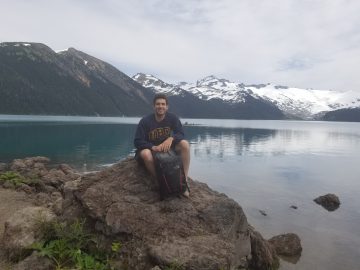
I was in South Korea for three months from March to May, 2017 to collect data for my PhD dissertation research. I’m exploring how environmental controversies surrounding the 2018 PyeongChang Winter Olympic Games are interpreted and experienced by different groups, and their resulting implications. Specifically, I focus on the contested development of Mount Gariwang, a former ‘Protected Area for Forest Genetic Resource Conservation’ for hundreds of years now turned into the official alpine skiing venue for three days of Olympic events.

While in Korea, I interviewed activists, journalists and local residents to see how each group made sense of the controversy. I also visited the development site to contextualize and better understand my interview data, and get a more nuanced and ‘visceral’ sense for my place-based research.

An overarching purpose of my research is to provoke thinking about the role of communication in asking questions of power and collective responsibility, and in envisioning alternative democratic and ecological futures.

Tell us about a highlight from the experience:

It would definitely be getting to meet and talk to such a wide range of people. All the more so because this was the part I was most nervous about (i.e. cold-calling strangers to see if they wanted to chat about this issue!). Most interview participants were more than eager to connect me to others, and it was a humbling experience not just in terms of learning more about the subject matter, but also about the different lived experiences that have led them there, shaping their values and visions as well.

Also, towards the end of my stay in Korea, I had the opportunity to present to the activists what the locals directly impacted by the development had to say. This was another highlight as most activists mentioned that this (hearing the voices of the locals) was something they did not get to do. This was a neat experience because it’s not often that grad students get to witness their work having real-life connections so immediately in front of their eyes!

Did anything surprise you?:
The fact that opinions varied significantly within the local community was surprising. It was a good reminder to take extra caution not to homogenize and romanticize the locals as always representing one solid body of resistance.

Why did you choose to do your graduate studies with UBC Kinesiology?:
I wanted to work with Dr. Brian Wilson as his research interests and mine are similar. He has done excellent work exploring social, cultural, political and environmental issues surrounding sport, physical activity and health – there is so much to learn from him. Also, UBC Kinesiology offers a range of socio-cultural kinesiology classes by experts in the field, as well as the flexibility to take courses in other departments according to your research interests. The longer I am here, the luckier I feel in having the opportunity to work alongside such dedicated professors and talented colleagues. Lastly, it would be a lie to say beautiful Vancouver and British Columbia weren’t a factor! 🙂
What advice to have for your peers?:
You are worth so much more than your productivity!Also, don’t let impostor syndrome get in the way of taking up opportunities – whether it be asking that burning question you feel is “too dumb” to ask, going up to talk to a prof at a conference, or taking a shot at a scholarship.
What do you hope to do after graduation?:

I’d like to leave my options open for as many career options as possible – whether that be in academia or otherwise. I’d like to do something that critically engages with, and addresses social inequality. There certainly is no shortage of different kinds of inequality but at the moment, I’m interested in environmental politics, justice, and ecological democracy.

Liv Yoon

Expected graduating year: December 2018
Degree: PhD
Supervisor: Dr. Brian Wilson
Hometown: Rothesay, New Brunswick / South Korea

You just returned from a research trip to South Korea, what were you working on there?

I was in South Korea for three months from March to May, 2017 to collect data for my PhD dissertation research. I’m exploring how environmental controversies surrounding the 2018 PyeongChang Winter Olympic Games are interpreted and experienced by different groups, and their resulting implications. Specifically, I focus on the contested development of Mount Gariwang, a former ‘Protected Area for Forest Genetic Resource Conservation’ for hundreds of years now turned into the official alpine skiing venue for three days of Olympic events.

While in Korea, I interviewed activists, journalists and local residents to see how each group made sense of the controversy. I also visited the development site to contextualize and better understand my interview data, and get a more nuanced and ‘visceral’ sense for my place-based research.

An overarching purpose of my research is to provoke thinking about the role of communication in asking questions of power and collective responsibility, and in envisioning alternative democratic and ecological futures.

Tell us about a highlight from the experience:

It would definitely be getting to meet and talk to such a wide range of people. All the more so because this was the part I was most nervous about (i.e. cold-calling strangers to see if they wanted to chat about this issue!). Most interview participants were more than eager to connect me to others, and it was a humbling experience not just in terms of learning more about the subject matter, but also about the different lived experiences that have led them there, shaping their values and visions as well.

Also, towards the end of my stay in Korea, I had the opportunity to present to the activists what the locals directly impacted by the development had to say. This was another highlight as most activists mentioned that this (hearing the voices of the locals) was something they did not get to do. This was a neat experience because it’s not often that grad students get to witness their work having real-life connections so immediately in front of their eyes!

Did anything surprise you?:

The fact that opinions varied significantly within the local community was surprising. It was a good reminder to take extra caution not to homogenize and romanticize the locals as always representing one solid body of resistance.

Why did you choose to do your graduate studies with UBC Kinesiology?:

I wanted to work with Dr. Brian Wilson as his research interests and mine are similar. He has done excellent work exploring social, cultural, political and environmental issues surrounding sport, physical activity and health – there is so much to learn from him. Also, UBC Kinesiology offers a range of socio-cultural kinesiology classes by experts in the field, as well as the flexibility to take courses in other departments according to your research interests. The longer I am here, the luckier I feel in having the opportunity to work alongside such dedicated professors and talented colleagues. Lastly, it would be a lie to say beautiful Vancouver and British Columbia weren’t a factor! 🙂

What advice to have for your peers?:

You are worth so much more than your productivity! Also, don’t let impostor syndrome get in the way of taking up opportunities – whether it be asking that burning question you feel is “too dumb” to ask, going up to talk to a prof at a conference, or taking a shot at a scholarship.

What do you hope to do after graduation?:

I’d like to leave my options open for as many career options as possible – whether that be in academia or otherwise. I’d like to do something that critically engages with, and addresses social inequality. There certainly is no shortage of different kinds of inequality but at the moment, I’m interested in environmental politics, justice, and ecological democracy.

Fred Hume, Athletics Historian

As UBC’s first and only Athletics historian, Fred Hume brings the stories of Kinesiology Alumni to life.

Fred’s well-researched and illuminating profiles ensure the legacies of the Kinesiology students who came before continue to live on. His work also serves as an information resource for coaches, students and faculty together with campus, local and national media.

Long-time football statistician, Fred Hume entered the UBC Sports Hall of Fame himself in 2011, nearly 22 years after he began working to uncover the great UBC teams, athletes and builders of sport dating back to 1915.

Fred’s efforts resulted in the establishment and development of the UBC Sports Hall of Fame which has been instrumental in re-connecting the university with hundreds of its most accomplished athletic alumni encouraging them to become more directly involved with the campus and their former teams.

Much of UBC’s now established historical sport information including all-time lists, sport histories, sport records and historical highlights is a result of his original research – information of value to Athletics’ Development and Sports Information teams as well as to the university.

Explore Kinesiology Alum Bios